

A retaining wall is essential for transforming a sloped yard into a functional, safe, and visually appealing outdoor space. When combined with Patio Construction, it not only stabilizes your landscape but also creates usable areas for entertaining, relaxing, and enhancing your home’s value.
What You Need to Know
- ✔ Retaining walls prevent erosion and structural damage
- ✔ They turn unusable slopes into functional outdoor space
- ✔ Patio Construction integrates retaining walls into luxury backyard design
- ✔ Proper drainage and engineering are critical
- ✔ Done right, it adds both beauty and long-term value
There’s something we see all the time in Scottsdale.
A homeowner has a beautiful property… but the backyard?
Sloped. Uneven. Hard to use.
They’ll say something like:
“We just don’t know what to do with this space.”
And honestly, that’s fair.
Because a sloped yard looks like a landscaping issue.
But it’s not.
It’s a structural problem first—and a design opportunity second.
That’s where retaining walls come in.
What Does a Retaining Wall Actually Do?
A retaining wall holds back soil, prevents erosion, and creates level areas in a sloped yard—making the space usable and safe.
At its core, it’s about control.
Without a retaining wall:
- Soil shifts over time
- Water runoff causes erosion
- Landscaping becomes unstable
With a properly built wall?
Everything changes.
You gain:
- Flat, usable space
- Structural stability
- A foundation for outdoor living features
We worked with a homeowner in North Scottsdale whose backyard was essentially unusable.
Steep slope. Loose soil. No clear space for anything.
After installing a retaining wall system as part of Patio Construction, we created multiple leveled areas—one for a patio, one for seating, and one for landscaping.
Same yard.
Completely different experience.
Why Are Retaining Walls Critical for Sloped Yards?
Because without proper support, sloped yards are prone to erosion, drainage issues, and long-term structural damage.
Let me be blunt.
This is where people underestimate the problem.
A slope doesn’t just sit there quietly.
Over time, it moves.
What can happen without a retaining wall:
- Soil erosion after rain or irrigation
- Water pooling near your home’s foundation
- Landscape features shifting or failing
- Increased maintenance and repair costs
We had a client near DC Ranch who delayed installing a retaining wall.
A year later?
Heavy rain caused soil movement that damaged their existing patio.
What started as a “maybe later” project turned into a necessary repair.
This is where planning ahead saves money—and stress.
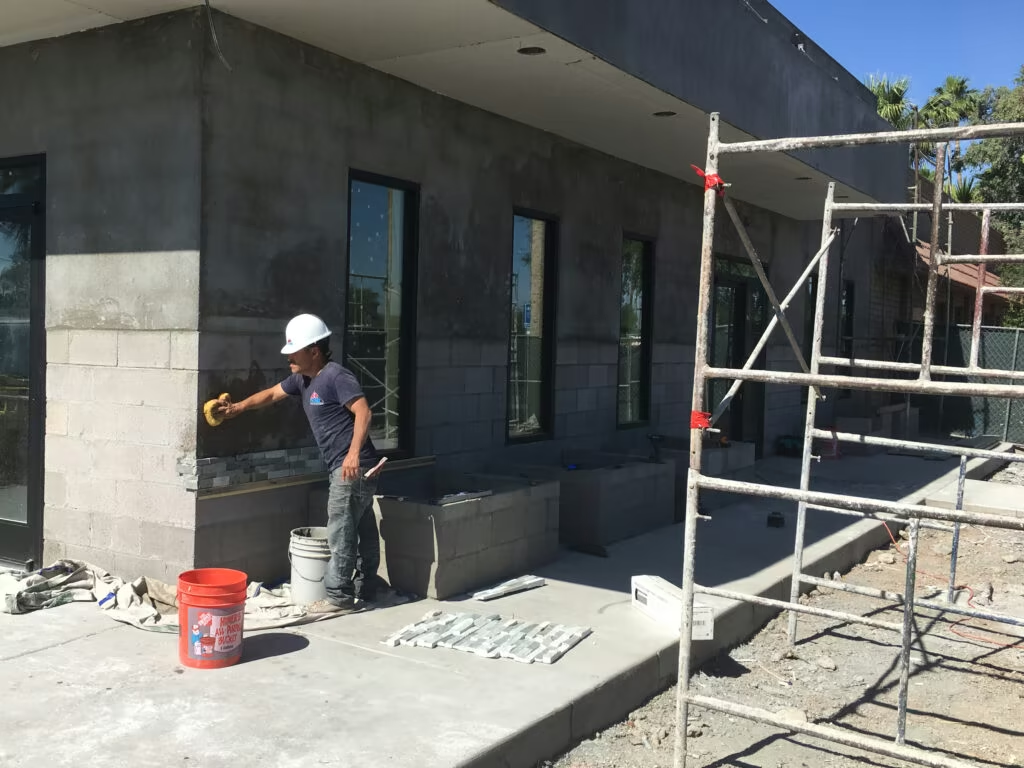
How Does Patio Construction Work with Retaining Walls?
Patio Construction and retaining walls go hand-in-hand—one creates the structure, the other creates the lifestyle.
Here’s the thing.
You can’t build a premium patio on unstable ground.
It won’t last.
How we approach it:
- Stabilize the slope with engineered retaining walls
- Address drainage and water flow
- Create level surfaces for patios and seating
- Integrate design elements seamlessly
This is where most DIY or low-budget projects fall apart.
They focus on the surface—pavers, finishes, furniture.
But ignore the foundation.
And when the foundation fails?
Everything on top follows.
What Types of Retaining Walls Work Best?
The best retaining wall depends on your yard’s slope, soil conditions, and design goals—but strength and drainage are always the priority.
Common Options:
| Type | Best For |
|---|---|
| Concrete Block | Strength and durability |
| Natural Stone | High-end aesthetic |
| Poured Concrete | Structural stability for steep slopes |
| Segmental Systems | Flexibility and design versatility |
We had a homeowner in Grayhawk who wanted a natural, organic look.
We used natural stone retaining walls integrated into the landscape.
It didn’t feel like a “structure.”
It felt like part of the environment.
That’s the difference between basic landscaping and intentional design.
Why Drainage Is the Most Important (and Overlooked) Factor
Without proper drainage, even the strongest retaining wall will fail over time.
This is where things get technical—and where mistakes happen.
Water builds pressure behind the wall.
If it has nowhere to go?
It pushes.
Eventually, something gives.
What proper drainage includes:
- Gravel backfill
- Drain pipes (weeping tile systems)
- Proper grading and slope management
We’ve seen walls fail—not because of poor materials, but because drainage was ignored.
That’s not a small mistake.
That’s a rebuild.
How Do You Avoid Costly Retaining Wall Mistakes?
The key is proper design, engineering, and working with experienced professionals who understand both structure and aesthetics.
Let me be direct.
This isn’t a project to cut corners on.
Common Mistakes:
- Skipping engineering for taller walls
- Ignoring drainage requirements
- Choosing materials based on looks alone
- Hiring inexperienced contractors
We’ve had clients come to us after failed installations—walls leaning, cracking, or collapsing.
Fixing those issues?
More expensive than doing it right the first time.
A Final Thought — This Is the Foundation of Your Outdoor Space
Here’s what most homeowners don’t realize.
Your backyard potential is already there.
It’s just hidden behind the slope.
A retaining wall doesn’t just fix a problem.
It unlocks possibilities.
Outdoor living spaces.
Entertaining areas.
A backyard that actually gets used.
And once it’s done right?
You stop seeing limitations.
You start seeing opportunity.
Ready to Transform Your Sloped Yard into a Functional Outdoor Space?
Call (480) 990-7555 today to schedule your consultation with FHR Construction.
Let’s build something that works—and lasts.